iPrecision Parts Expands CNC Machining Capacity
iPrecision Parts has expanded its CNC machining capacity.

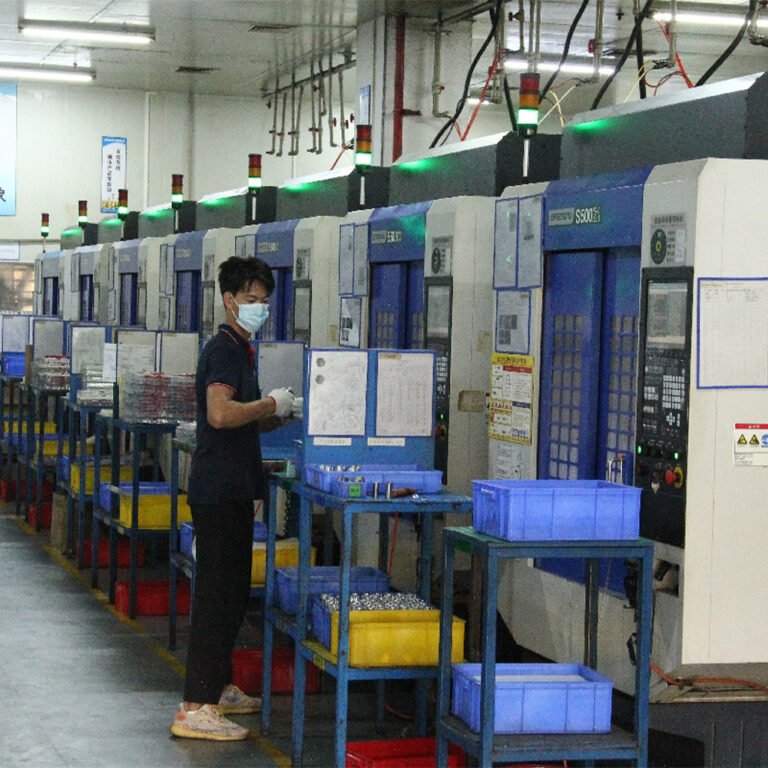
iPrecision Parts has expanded its CNC machining capacity.
Dongguan Precision Hardware Products Supports Medical Device Manufacturing In the medical device industry, high-precision machining technology directly impacts equipment stability and surgical safety. This is particularly true in fields such as minimally invasive interventional procedures, medical implants, and surgical robotics, where requirements for precision hardware and ceramic components are extremely rigorous. How can product quality…
CNC Machining for Medical Equipment in San Diego CNC machining for medical parts is a manufacturing method that utilizes Computer Numerical Control technology to produce high-precision components for medical laboratory equipment, surgical robots, clinical diagnostic analyzers, and endoscopes. CNC machining is widely used in the medical field. It enables manufacturers to produce parts with tight…
Three Typical Part Machining Strategies and Five Key Selection Principles for CNC Milling I. Three Typical Part Machining Strategies Strategy 1: Square Plate Parts (AISI 1045 / 45 Steel) A typical entry-level part; the blank is a 100×80×27mm rectangular block. With the bottom surface pre-machined, the top surface, profile, holes, and slots require machining. The…
What are the advantages of 5-axis CNC machining? Mechanical configurations of 5-axis machine tools First, let us define what a 5-axis machine tool is. As the name implies, 5-axis machining involves adding two rotary axes to the three standard linear axes (X, Y, and Z). Two of the three potential rotary axes (A, B, and…
Overview of Thread Milling With the widespread adoption of CNC machine tools, thread milling technology is increasingly utilized in the machinery manufacturing industry. Thread milling creates threads through the simultaneous three-axis motion of a CNC machine tool, using a thread milling cutter to perform helical interpolation; for every full circular rotation the cutter makes in…
An analysis of PEEK’s excellent turning characteristics—ideal for the precision machining of bushings, seal rings, and complex rotational parts—ensuring dimensional accuracy and superior surface quality. First, let us examine the fundamental material properties that give PEEK its excellent turning performance. PEEK is a semi-crystalline aromatic polymer; its molecular structure imparts a balance of rigidity and…
Applications, Precision, and Roughness of Turning Operations What can turning do? In turning, the workpiece rotates to generate the primary cutting motion. The resulting machined surface is a surface of revolution. Turning methods can also machine the end faces (flat surfaces) of rotating workpieces. By executing different feed motions of the tool relative to the…
Machining Structural Components for Optical Instruments: Machining Structural Components for Optical Instruments:Why Are Flatness and Perpendicularity Requirements Ten Times Stricter Than for Standard Mechanical Parts? It is not the entire component that requires such strict tolerances, but rather the optical reference surfaces.In the machining of structural components for optical instruments, flatness and perpendicularity requirements are…
How to Choose a Medical Device Parts Manufacturer? Characteristics of Top-Tier Manufacturers I. The Threshold for Manufacturing Medical Device Parts Is Far Higher Than ImaginedWith the rapid adoption of minimally invasive surgery and robot-assisted surgical procedures in domestic hospitals, the innovation and iteration cycles for surgical instruments are shortening significantly. Behind every new generation of…