5-Axis CNC Machining for Surgical Robot Joints

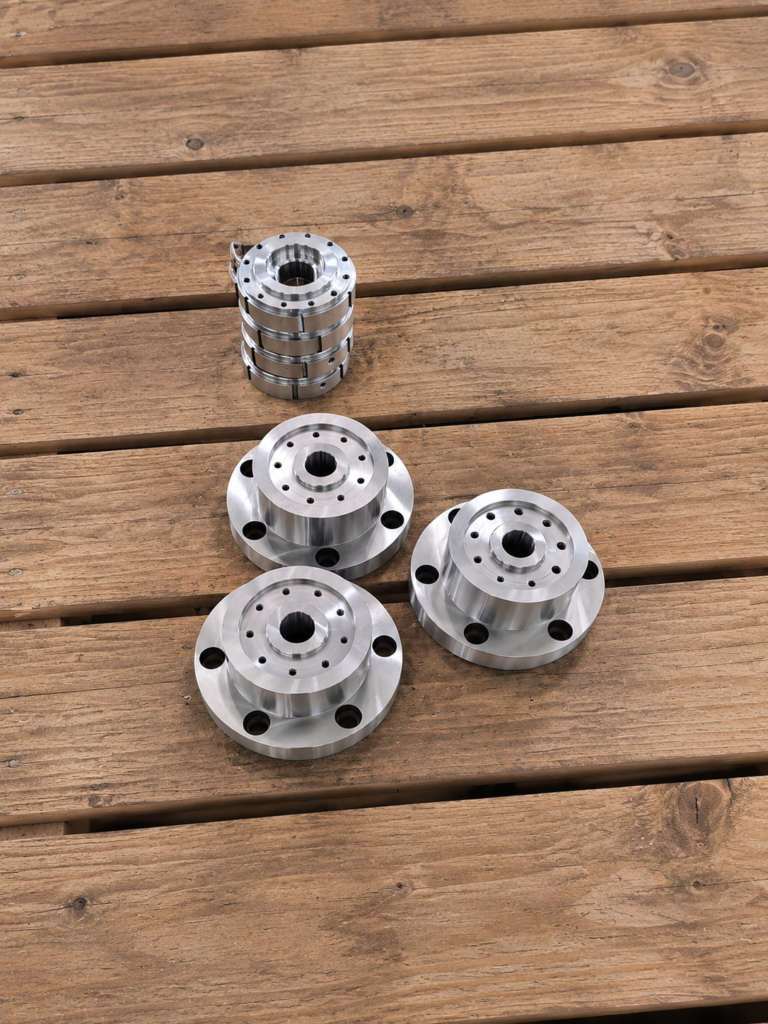
Surgical robot joint housing 5-axis CNC machining is used to produce compact mechanical components that support bearings, transmission parts and connecting interfaces. A joint housing may combine internal cavities, coaxial bores and angled mounting features within a limited space.
The machining scope covers the housing component manufactured from the customer’s drawing, not the complete surgical robot or its assembly.
Why the Geometry Requires Five Axes
Joint housings rarely consist of simple parallel faces. Their external profiles may be curved, while cable openings, mounting holes and connection surfaces are positioned at different angles.
Five-axis machining allows the cutting tool to approach these features by rotating the workpiece or machine head. Several sides can therefore be completed from one fixture, reducing repeated positioning and keeping related features connected to the same machining reference.
Matching Features to CNC Operations
Each section of the housing requires a different machining approach:
| Housing feature | Machining approach |
|---|---|
| Internal transmission cavity | Adaptive roughing and finish milling |
| Bearing seat | Circular interpolation or precision boring |
| Angled mounting face | Indexed five-axis milling |
| Side connection hole | Multi-angle drilling |
| Curved external profile | Simultaneous five-axis finishing |
| Cable clearance opening | Contour milling |
The toolpath must provide enough clearance between the spindle, fixture and housing. Machine simulation is particularly useful when machining deep internal areas or features close to an angled wall.
From Rough Cavity to Functional Interfaces
Machining normally begins with the primary locating face and a rough external profile. The internal cavity is then opened using efficient material-removal toolpaths.
Enough stock is retained around bearing seats and mounting interfaces for later finishing. Removing all material from one side too early can release internal stress and change the shape of a thin housing.
Once roughing is complete, the bearing bores and locating features are machined from a common setup whenever possible. Angled holes, side openings and curved surfaces are completed after the main structural features have stabilized.
Tool Access Inside the Housing
Deep cavities may require extended-reach tools, but unnecessary tool length increases vibration and deflection. Short tools are used where access permits, with longer tools reserved for restricted internal areas.
Tool orientation can be adjusted continuously during five-axis finishing to improve access and avoid contact between the holder and the workpiece. This also allows the cutter to maintain a more effective contact position on curved surfaces.
Preparing the Housing for Assembly
After CNC machining, internal edges, bore entrances and cable openings require controlled deburring. Chips must be removed from enclosed cavities and intersecting holes.
Bearing seats, joint interfaces and mounting features are then checked against the customer’s drawing. Reliable surgical robot joint housing 5-axis CNC machining depends on stable fixturing, collision-free toolpaths and an operation sequence that preserves the relationship between all functional interfaces.