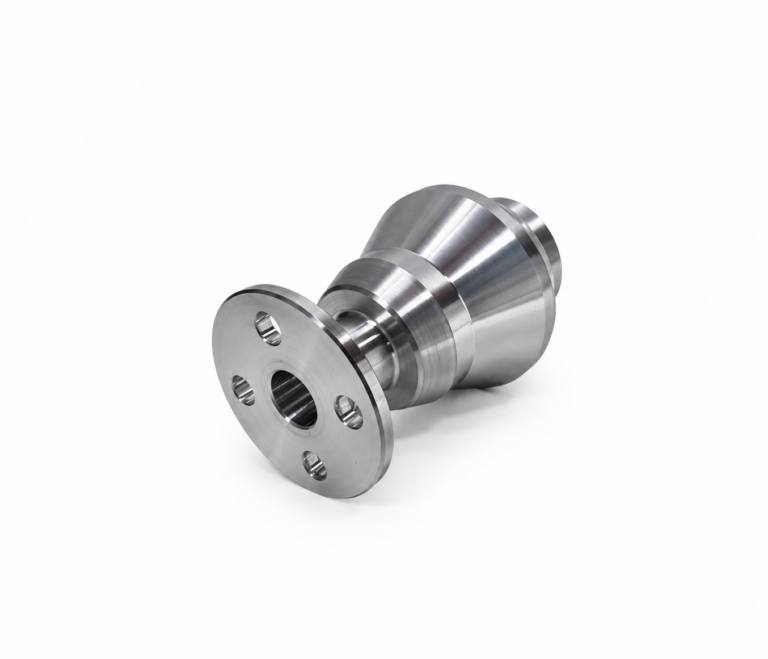
high temperature alloy machining
1. What are superalloys?
Superalloys—also known as heat-resistant alloys or high-temperature strength alloys—are alloys that exhibit heat resistance at elevated temperatures. Heat resistance encompasses two properties: thermal stability and high-temperature strength. Thermal stability refers to the ability to resist oxidation and corrosion by combustion gases at high temperatures, while high-temperature strength refers to the alloy’s ability to resist plastic deformation and fracture under high-temperature conditions. In addition to base elements such as iron, chromium, nickel, and cobalt, superalloys contain strengthening elements like aluminum, titanium, niobium, barium, vanadium, tungsten, molybdenum, and manganese. They can withstand oxidation temperatures ranging from 900°C to 1100°C and operate in high-temperature oxidizing atmospheres or combustion gas environments. They are currently widely used across various sectors, particularly in the aviation, aerospace, and shipbuilding industries.

2. Classification of superalloys
Classification by production process.
Wrought superalloys. These are characterized by good high-temperature plasticity and suitability for pressure-working processes such as forging, hot rolling, and cold drawing. Common grades include GH2036, GH2132, GH4033, GH4037, GH4049, and GH4169.
Cast superalloys. These are characterized by higher contents of strengthening elements (such as W, Mo, Ti, and Al) and carbon, in addition to significant amounts of Fe and Ni. They possess high high-temperature strength but poor plasticity and are typically used in the as-cast state. Common grades include K214, K401, and K417.
Classification by matrix alloy element.
Iron-based superalloys (also known as heat-resistant steels). These alloys are relatively inexpensive but have poor resistance to high-temperature oxidation. Their hardness ranges from 255 to 321 HBW, tensile strength (σb) from 883 to 971 MPa, elongation (δ) from 15% to 22.1%, and thermal conductivity (κ) from 13.39 to 17.17 W/m·K. Common grades include GH2036, GH136, GH2132, and K136.
Iron-nickel-based superalloys. This class of alloys contains 30%–45% nickel; they offer superior high-temperature oxidation resistance compared to iron-based superalloys and are widely used. Their hardness ranges from 302 to 388 HBW, tensile strength (σb) from 922 to 1275 MPa, elongation (δ) from 10% to 25%, and thermal conductivity (κ) from 10.88 to 15.49 W/m·K. Common grades include GH2135, GH1140, K4, and K214.
Nickel-based superalloys. These have a nickel matrix with a nickel content exceeding 45% and currently offer the best high-temperature oxidation resistance among superalloys. Their hardness ranges from 255 to 361 HBW, tensile strength (σb) from 893 to 1236 MPa, elongation (δ) from 10% to 25%, and thermal conductivity (κ) from 7.95 to 11.72 W/m·K. Common grades include GH4037, GH4049, GH4169, GH4698, K401, and K417.
Cobalt-based superalloys. These have a cobalt matrix with a cobalt content of up to 58%; a typical representative grade is K10. They possess high high-temperature strength, capable of withstanding temperatures up to 1000°C. Their hardness is below 34 HRC, tensile strength (σb) ranges from 736 to 1069 MPa, elongation (δ) from 9% to 60%, and thermal conductivity (κ) from 13.4 to 15.07 W/m·K. Due to the high cost of cobalt, grades K211 and K214—both iron-nickel superalloys—are increasingly used as substitutes.
In addition, there are superalloys based on Mo, Ti, and Nb.

3. Machining characteristics of superalloys
1)Cutting temperatures for superalloys are high—1.5 to 2 times higher than those for 45 steel—while thermal conductivity is poor, being only one-third that of 45 steel.
2)At high temperatures, certain chemical elements within the material react with oxygen, carbon, and hydrogen from the air to form hard particles such as TiC, VC, NbC, and SiO₂. These carbides exhibit micro-hardness values ranging from 2400 to 3300 HV—comparable to the hardness of cemented carbide tools. These hard particles exert a counter-cutting action and cause severe friction against the tool, resulting in groove wear on the tool’s flank face.
3)The material retains high yield strength, tensile strength, and creep-rupture strength, as well as good ductility, at temperatures between 650°C and 760°C. If the machinability of 45-grade steel is set at 100%, the machinability of superalloys is merely 10% to 20%.
4)Cutting temperatures are high; at these elevated temperatures, diffusion occurs between the chips and chemical elements within the tool material, leading to forms of wear such as diffusion wear, notch wear (boundary wear), and crater wear, as well as the formation of built-up edges.
5)A work-hardened layer forms under the influence of cutting forces, raising the hardness of the cutting surface and the machined surface to 1.5–2 times that of the base material, thereby accelerating tool wear.
6)The linear expansion coefficient is high at elevated temperatures. While the coefficient at room temperature is similar to that of carbon steel—for instance, GH3044 has a coefficient of αl = 11.7 × 10⁻⁶ K⁻¹ at room temperature—it rises to αl = 25.1 × 10⁻⁶ K⁻¹ when the cutting temperature reaches 900°C, more than doubling in value. Significant deformation occurs during high-temperature cutting, which is highly detrimental to dimensional control. Consequently, intensive cooling is essential during finishing operations to lower the workpiece temperature, and dimensional measurements should only be taken after the workpiece has cooled.
7)In various superalloys, the intermetallic γ′ phase serves as a precipitation-strengthening phase. Elements such as Ti, Co, Ni, and Al dissolve into the γ′ phase (Ni₃Al), strengthening grain boundaries, inhibiting grain boundary sliding and migration, and enhancing atomic bonding forces. A higher content of this strengthening phase results in greater alloy strength, hardness, and wear resistance, but makes machining more difficult. Furthermore, the strength of the γ′ phase increases with rising temperature, peaking at 700°C. As shown in the figure, high-speed machining should be employed for superalloys; by increasing the cutting speed and temperature—raising the cutting temperature above 700°C, or even to 900–1000°C—the alloy’s yield strength, hardness, and wear resistance drop significantly, thereby facilitating the machining process.