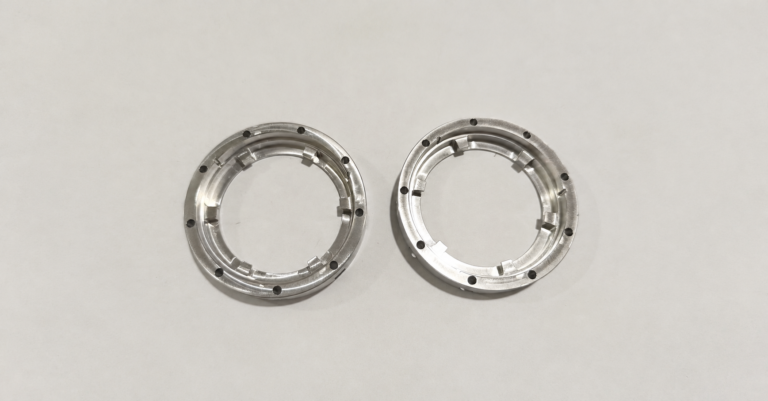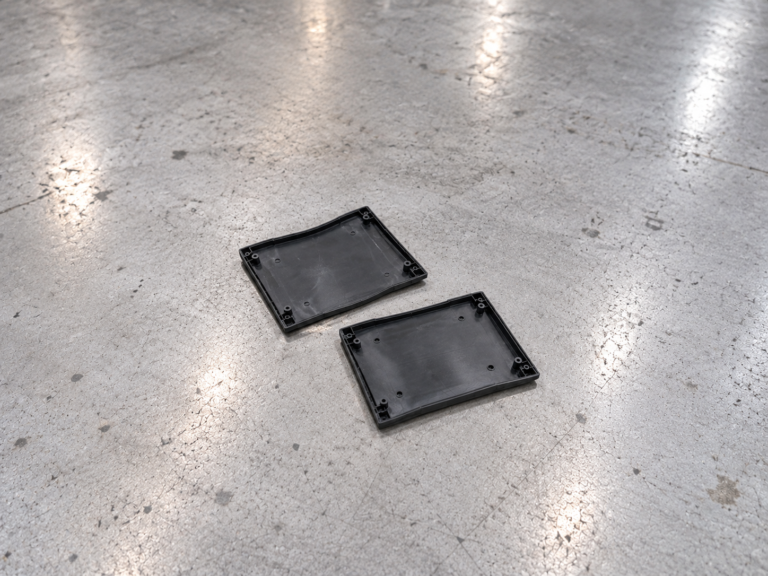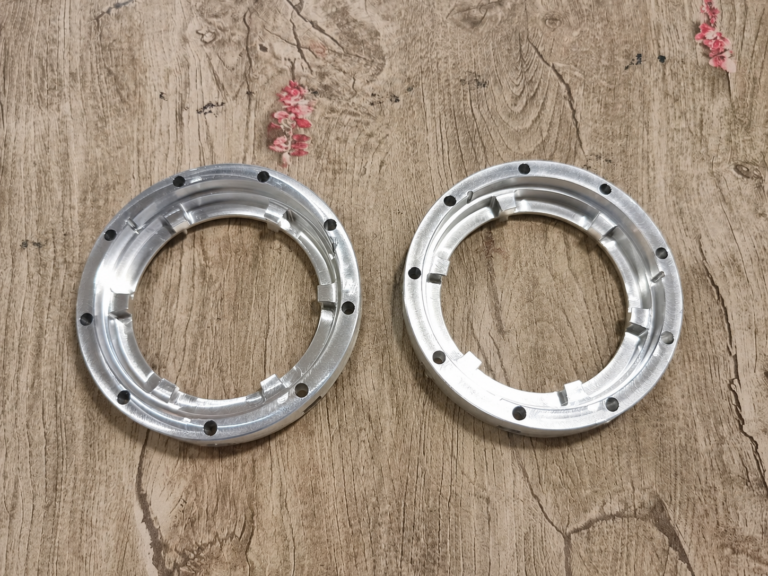
POM plastic CNC milling service
High-Precision CNC Milling of POM/PEEK Materials

Why POM and PEEK Cannot Be Machined Like Metal Parts?
While POM offers relatively good dimensional stability—making it suitable for sliding components, guides, and lightly loaded structural parts—it exhibits significantly more elasticity and thermal deformation than metal. PEEK offers higher strength and superior heat resistance, making it a common choice for insulating structural components in the semiconductor, medical, robotics, and aerospace sectors; however, it entails high material costs, and factors such as machining heat, burrs, and spring-back in thin-walled sections cannot be overlooked.
A major misconception in plastic part machining is equating “easy to machine” with “machining without care.” Insufficiently sharp tools cause surface fuzzing; improper cooling leads to heat-induced deformation at hole edges; and overly hard fixture contact surfaces easily leave impressions on cosmetic or thin-walled areas. During small-batch prototyping, every piece is valuable; scrapping a single part can disrupt the assembly schedule.

Technical Approach: Achieving Precision in Plastic Parts Through Low-Stress Machining
1. Identify deformation-prone areas during drawing review. Thin-walled sections, elongated parts, rings, large flat surfaces, areas with dense arrays of small holes, and cantilever structures are all high-risk zones. For these areas, do not focus solely on tolerance values; consider the part’s state after unclamping and the stresses it will face during actual assembly. Distinguish early between functional surfaces, cosmetic surfaces, and areas where tolerances can be relaxed.
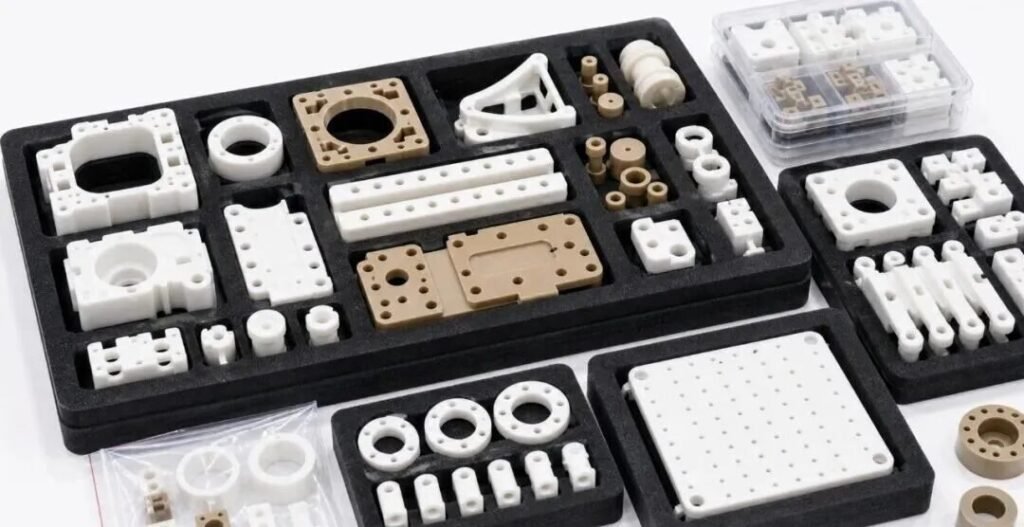
2. Determine material pre-treatment based on the specific grade. Materials such as POM, PEEK, PPS, PTFE, and nylon differ in moisture absorption, heat resistance, rigidity, and spring-back characteristics. For dimensionally sensitive PEEK or nylon parts, verify the material batch, storage conditions, and stabilization time prior to machining. If necessary, employ pre-baking, temperature-controlled storage, or stabilization treatments after rough machining.
3. Ensure clamping is low-pressure, uniform, and repeatable. Precision plastic parts are unsuitable for forceful clamping with hard jaws. Instead, use soft jaws, nylon shims, vacuum chucks, form-fitting fixtures, or large-area supports to distribute clamping force. For thin-walled or large flat parts, it is crucial to avoid localized clamping pressure; otherwise, the part may measure accurately while clamped but deform once released.
4. Separate roughing and finishing stages. For POM and PEEK parts, roughing should remove the bulk of the material while leaving a finishing allowance of approximately 0.1mm to 0.3mm on critical dimensions. Allow the part a brief period to relieve stress after roughing before proceeding to semi-finishing and final finishing. For thin-walled parts, this step is more critical than simply increasing machine tool precision.

5. Ensure sharp cutting tools and minimize cutting heat. Machining plastic parts requires sharp tools, appropriate rake angles, and unobstructed chip evacuation paths. During finishing, use shallow depths of cut and steady feed rates to prevent heat buildup from friction. While materials like PEEK offer superior performance, cutting heat can still affect hole diameters and edge quality; for POM, the focus should be on managing burrs and dimensional spring-back.
6. Use 5-axis machining to minimize part flipping and clamping damage. Complex plastic parts often feature inclined holes, side steps, irregular profiles, and multi-directional mounting surfaces. 5-axis simultaneous or 3+2 positional machining reduces the need for repeated clamping, allowing multiple surfaces to be machined relative to a single datum, while also minimizing surface damage caused by repeated clamping.
7. Tailor parameter specifications to the application. For high-precision, custom plastic parts, it is not advisable to set tolerances to the limit for every dimension. Critical hole locations, mating surfaces, and datums can be managed with tiered tolerances ranging from ±0.005mm to ±0.02mm, while non-critical external areas can have looser tolerances. This approach ensures functionality while avoiding thermal deformation and increased costs associated with over-machining.
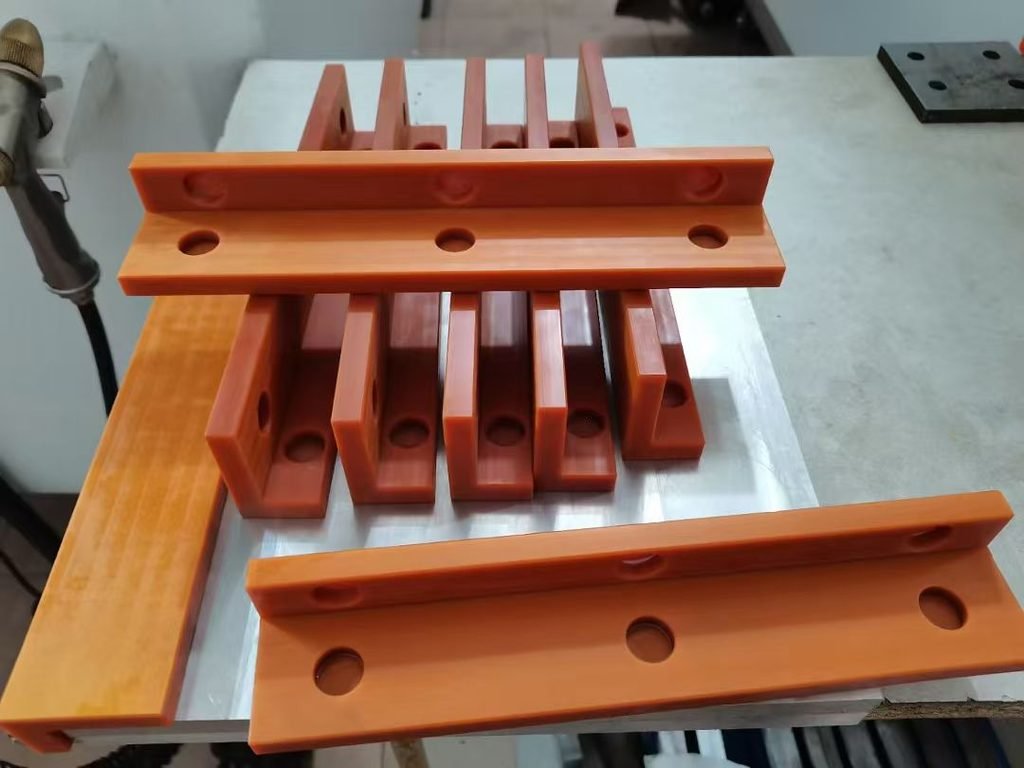
8. Avoid using brute force for deburring. Burrs on plastic parts often appear at hole openings, thin edges, slot bottoms, and intersecting structures. Deburring should be performed using sharp scrapers, light chamfering, soft abrasive finishing, or specialized tooling, rather than the aggressive grinding used for metal parts; otherwise, removing the burrs may compromise dimensional accuracy and edge geometry.
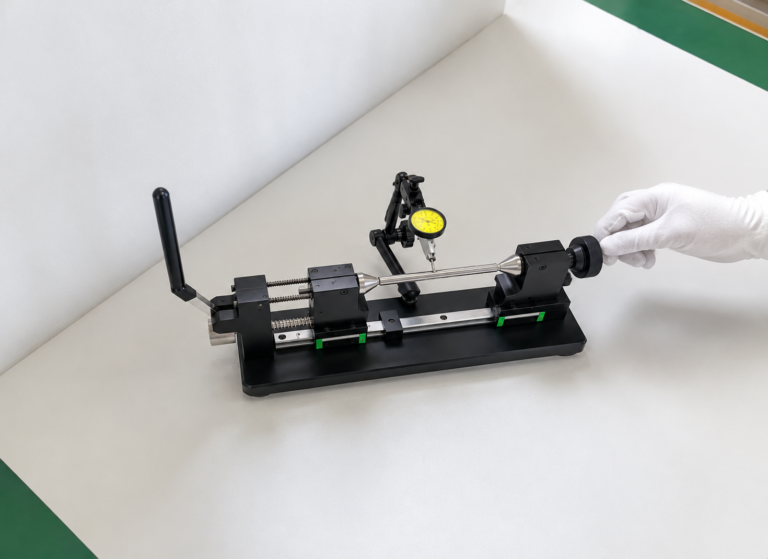
9. Maintain a stable inspection environment. Plastic parts are highly sensitive to temperature; measurements taken immediately after machining may differ from those taken after the part has settled for a period of time. CMM inspections, plug gauge checks, and caliper verifications should ideally be performed at a stable temperature; for critical parts, the time elapsed since machining should be recorded to avoid mistaking dimensions measured while the part is still warm for the final dimensions.

Summary: The key to precision machining of plastic parts is minimizing the exposure of the material to “unnecessary forces.”
For R&D engineers, when designing non-standard plastic parts (such as those made of POM or PEEK), it is best to clearly specify critical functional surfaces, areas at risk due to thin walls, directions of assembly-related stress, and inspection conditions. For procurement teams, the focus should not be solely on unit machining costs; it is equally important to assess whether the supplier understands the material properties, workholding techniques, and deformation control.
For startups or small-batch R&D projects, partnering with a supplier that possesses experience machining POM and PEEK—and offers capabilities such as 5-axis machining, vacuum chucks or soft fixtures, segmented machining, and CMM inspection—can significantly shorten the prototyping cycle.