large format CNC milling 200 inch
A Comprehensive Guide to Large-Scale CNC Machining: Key Differences from Standard Machining and Process Essentials
CNC machining of large components is critical when manufacturing heavy-duty parts for industries such as aerospace, energy, and transportation. These massive steel structures demand not only specific dimensions and strength but also strict machining tolerances and consistent surface quality. Standard machining equipment simply cannot meet the scale, precision, and repeatability required for such demanding applications.
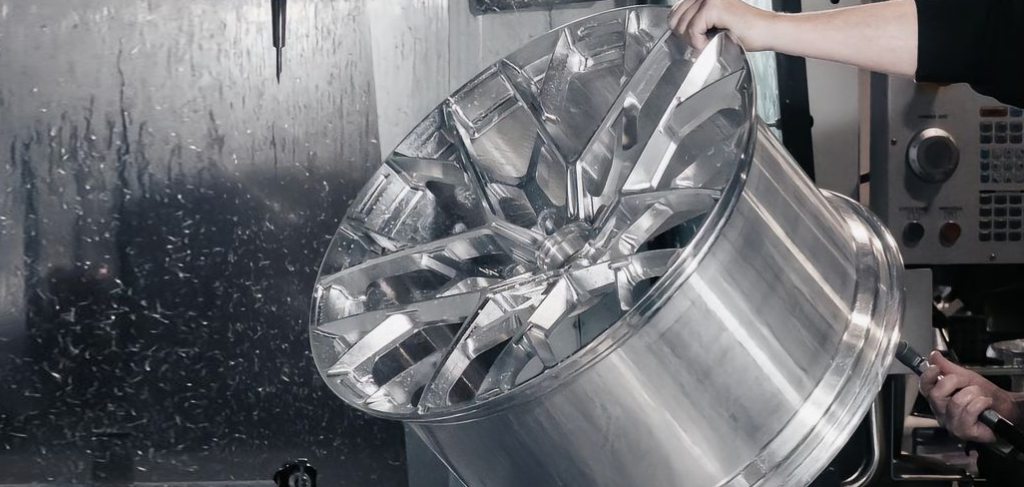
01. Key Differences from Standard CNC Machining
Part Size: Standard CNC machining is suited for small-to-medium parts, whereas large-scale CNC machining handles massive, heavy-duty components.
Workholding: Standard operations involve relatively simple fixtures, whereas large components require custom setups to ensure stability and precision.
Tolerances: While standard machining may utilize general tolerances, large parts require maintaining tighter tolerances over greater spans to ensure accuracy.

Tools and Equipment: Although conventional tooling suffices for smaller jobs, large-scale CNC machining requires heavy-duty tooling and highly rigid machines capable of withstanding greater forces and accommodating larger dimensions.

02. Materials and Surface Finish in Large-Part Machining
Material selection is crucial for large-scale CNC machining. These parts are often deployed in harsh environments where structural strength, durability, and dimensional accuracy are non-negotiable. Consequently, most manufacturers rely on a select group of materials capable of withstanding mechanical stress, temperature fluctuations, and long-term wear.
Common Materials
Carbon Steel: Valued for its high strength and cost-effectiveness, carbon steel is a staple material for industrial components. It is frequently used in heavy industrial machining, particularly for manufacturing base plates, brackets, and large housings.

Stainless Steel: Known for excellent corrosion resistance, stainless steel is ideal for environments involving moisture, chemicals, or high temperatures. It is commonly used in the energy, marine, and pharmaceutical industries.
High-Strength Alloys: Materials such as tool steel, titanium, and Inconel are frequently used in applications demanding exceptional load-bearing capacity and temperature resistance. These materials are commonly found in the aerospace and defense sectors, where reliability is paramount.
Surface Finish of Large Parts
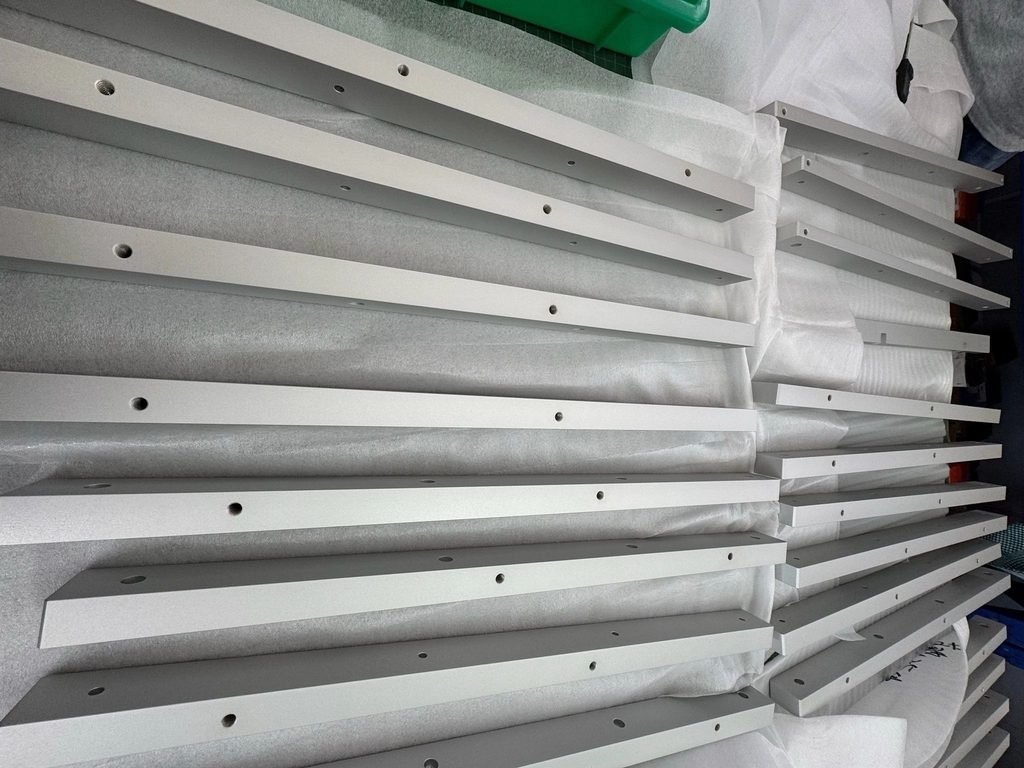
In many cases, the surface finish of large parts is just as important as dimensional accuracy. Poor surface quality can lead to issues with sealing, assembly, or mechanical movement.
In many cases, the surface finish of large parts is just as important as dimensional accuracy. Poor surface quality can lead to issues with sealing, assembly, or mechanical movement.
Achieving uniform surface quality across large areas requires specialized tools and machinery capable of maintaining consistent pressure and alignment throughout the entire process.
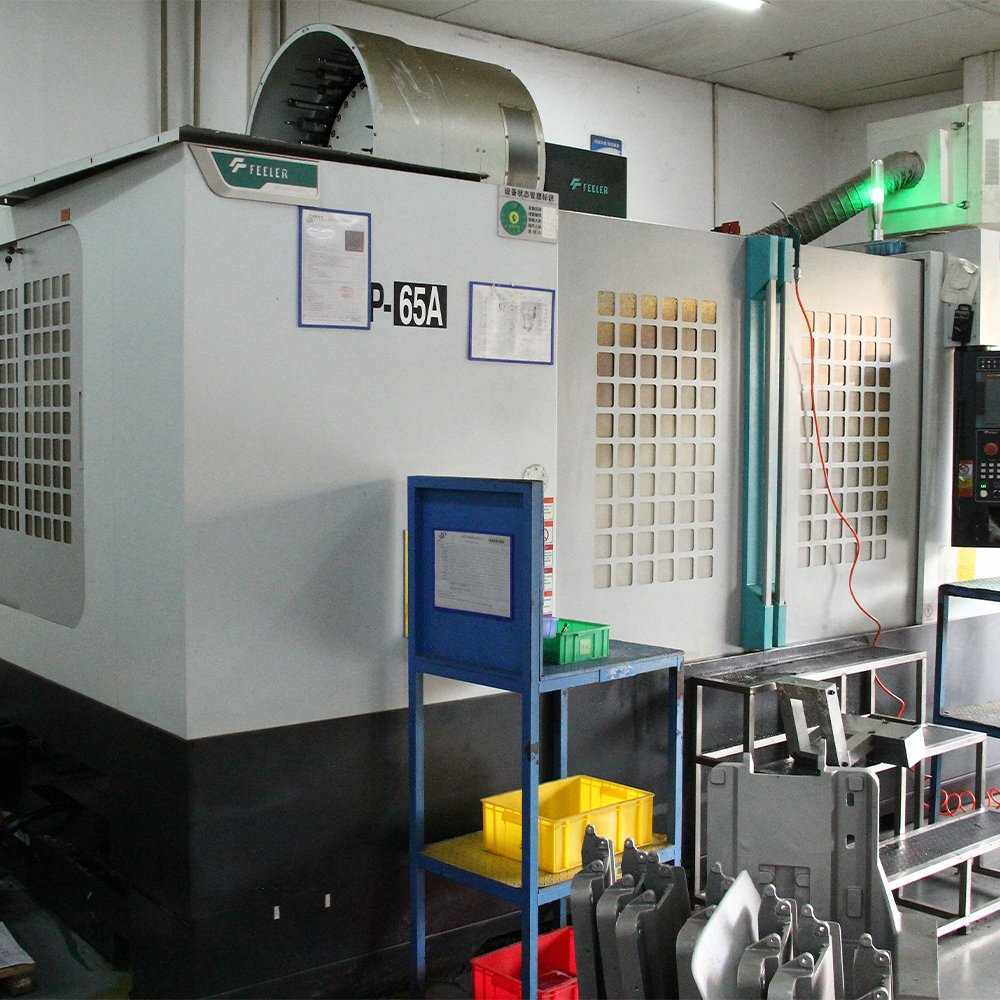
03. Advantages of CNC Machining Large Parts at Dongguan Precision Hardware Products Co., Ltd.
Modern industry demands components that are not only durable and precise but also suitable for mass production. CNC machining of large parts offers numerous advantages that help address these challenges and support complex production goals.
Superior Precision and Repeatability
A major advantage of CNC machining for large parts is the exceptional precision achieved, even with extra-large components. Advanced machine tools utilize automated systems and computer-controlled motion to minimize errors and ensure repeatable results across multiple units. This capability for machining heavy-duty parts is particularly critical in industries where structural integrity and safety are paramount.
Reduced Manual Labor and Increased Efficiency
Traditional machining of large parts often requires extensive manual intervention, from setup to measurement. In contrast, modern CNC systems automate many of these processes, thereby:
Minimizing human error
Accelerating production cycles
Reducing labor costs while enhancing consistency
For manufacturers requiring custom CNC parts, automation enables production scaling without compromising quality.

Capability to Handle Complex and Extra-Large Components
Machining large parts involves more than just increased dimensions; it often entails greater structural complexity. Components ranging from turbine housings to machine frames may feature intricate internal geometries, inclined surfaces, and deep holes. Thanks to multi-axis control and powerful software, CNC machine tools can easily produce ready-to-assemble CNC parts that meet strict dimensional and geometric requirements, even in large-scale production.