A New CNC Machining Resources Center to Help You Make Better Manufacturing Decisions

Choosing a CNC machining supplier involves more than comparing prices. Materials, tolerances, part geometry, inspection requirements, surface finishes, and packaging methods can all affect part quality, production cost, and delivery time.
To help engineers, buyers, and product developers make more informed decisions, iPrecision CNC has launched a new CNC machining resources center.
The center provides practical guides, machining case studies, quality-control information, and manufacturing insights. It is designed to help you prepare clearer project requirements, identify potential risks earlier, and communicate more efficiently before production begins.
Reduce Uncertainty Before Requesting a Quote
Many quotation delays are caused by incomplete or unclear project information.
Common questions include:
Our CNC machining resources center explains these topics in practical language, helping you understand which details may affect manufacturability, lead time, and cost.
This can reduce repeated quotation revisions and help suppliers evaluate your project more accurately.
Find Practical Answers for Your CNC Machining Project
Choose Suitable Materials and Processes
Material and machining process selection directly affect performance and cost.
Our guides compare common CNC machining materials and explain when to use CNC milling, CNC turning, drilling, tapping, or combined machining operations.
This information can help you avoid selecting materials or processes that are unnecessarily expensive or unsuitable for the application.
Specify Tolerances More Effectively
Not every dimension requires a tight tolerance.
Unnecessary precision may increase machining time, inspection requirements, scrap risk, and production cost.
Our tolerance guides explain dimensional tolerances, geometric tolerances, common accuracy levels, and the relationship between tolerance requirements and machining cost.
This helps you apply tighter control only to features that affect assembly or function.
Understand Quality and Inspection Methods
Before placing an order, you may want to understand how important dimensions, threads, holes, mating surfaces, and cosmetic areas will be inspected.
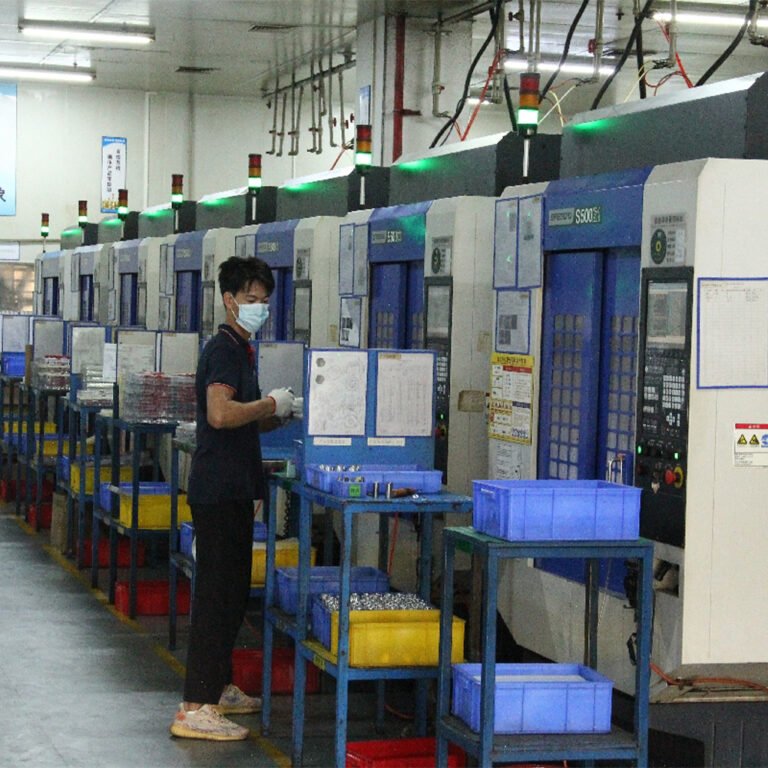
The Factory & Quality section explains our drawing review, in-process measurement, final inspection, surface checks, and packaging methods.
This provides greater visibility into how finished parts are controlled before shipment.
Review Typical Machining Projects
Machining case studies show how custom projects move from drawing review to finished parts.
They may include:
Confidential customer information and proprietary dimensions are not disclosed.
Improve Communication and Reduce Project Risk
Clear technical communication can reduce many common sourcing problems.
The resources center can help you:
The articles provide general guidance. Each actual project is still reviewed according to its drawings, material, geometry, quantity, tolerances, surface finish, and intended application.
Explore the CNC Machining Resources Center
Explore our machining guides, case studies, quality-control information, and company updates to prepare your next project more effectively.
For a project-specific review, send us your 2D drawings, 3D models, material requirements, quantity, tolerances, and surface finish specifications. Our team will provide manufacturing feedback and a quotation.