How to Choose the Right Material for CNC Machining
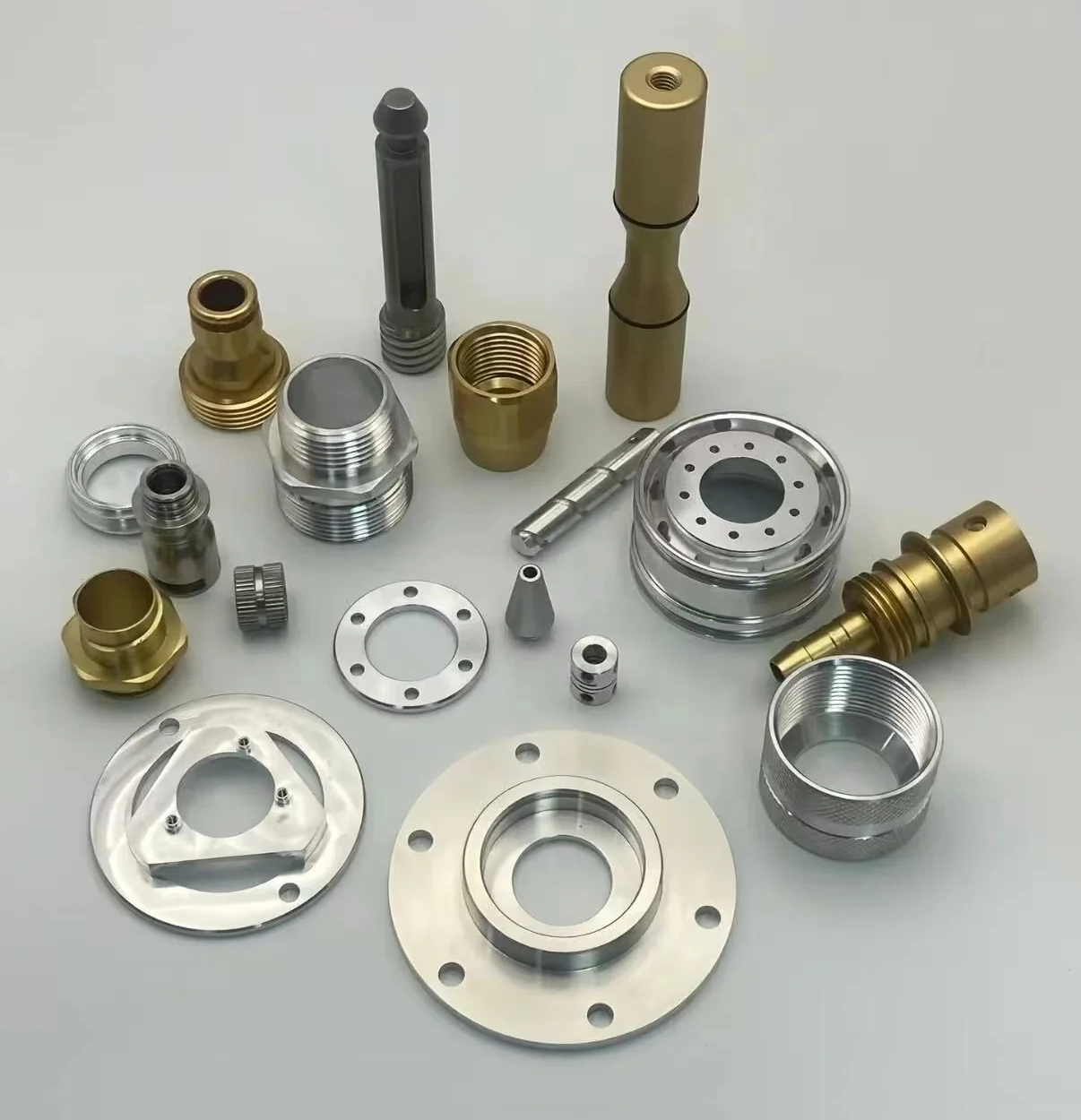
CNC machining materials directly affect part strength, weight, corrosion resistance, dimensional stability, surface finish, machining time, and total production cost.
A material that performs well in one application may not be suitable for another. Aluminum is lightweight and relatively easy to machine, while stainless steel provides greater strength and corrosion resistance but usually requires more machining time.
This guide explains the main factors to consider and compares common materials used for custom CNC machined parts.
Why Material Selection Matters
Material selection affects both the manufacturing process and the performance of the finished component.
Different materials require different cutting tools, cutting speeds, fixtures, inspection methods, and surface treatments. The selected material must also withstand the loads and environmental conditions the part will experience during use.
Choosing an unnecessarily expensive material can increase production cost without improving performance. On the other hand, selecting a material with insufficient strength, temperature resistance, or corrosion resistance may cause premature wear, deformation, or failure.
- Mechanical strength
- Part weight
- Corrosion resistance
- Operating temperature
- Machinability
- Total production cost
Key Factors to Consider
Mechanical Strength
The material must be strong enough to withstand the expected loads during assembly and use.
Shafts, gears, fixtures, brackets, and structural components normally require greater strength than decorative covers or lightweight housings. Important properties may include tensile strength, yield strength, hardness, fatigue resistance, and impact resistance.
Weight
Weight is important in aerospace, robotics, automotive equipment, portable devices, and moving assemblies.
Aluminum and titanium are often selected where weight reduction is important. Steel offers high strength but is considerably heavier. Engineering plastics may be suitable for lightweight parts with moderate mechanical requirements.
Corrosion Resistance
Parts exposed to water, humidity, salt, chemicals, food, or outdoor environments may require corrosion-resistant materials.
Stainless steel, titanium, brass, and many engineering plastics provide useful corrosion resistance. Aluminum can also perform well, especially when anodized. Carbon steel normally requires plating, painting, powder coating, or another protective finish.
Machinability
Machinability describes how easily and efficiently a material can be cut.
Aluminum and free-machining brass are generally easier and faster to machine than titanium, hardened steel, or certain stainless-steel grades. Difficult materials may require lower cutting speeds, specialized cutting tools, and longer machining times.
Surface Finishing
The selected material must be compatible with the required surface treatment.
Aluminum is commonly anodized, stainless steel can be passivated or polished, and carbon steel may be plated, black oxidized, painted, or powder coated. Finishing requirements should therefore be considered before confirming the material.
Common CNC Machining Materials
These materials can be processed using CNC milling or CNC turning, depending on the geometry and functional requirements of the part.
The following materials are widely used for custom CNC machined components. The correct choice depends on the required strength, environment, appearance, quantity, and production budget.
Aluminum
Aluminum is one of the most widely used CNC machining materials. It is lightweight, corrosion resistant, relatively easy to machine, and compatible with several surface finishes.
Aluminum 6061 is commonly used for brackets, housings, fixtures, electronic enclosures, robotics components, and general mechanical parts.
Aluminum 7075 provides higher strength and is often selected for aerospace, motorsport, robotics, and high-load structural components. However, it is normally more expensive than 6061.
Stainless Steel
Stainless steel is selected when strength, durability, corrosion resistance, and appearance are important.
Stainless steel 304 is widely used for general industrial, food-processing, and equipment components. Stainless steel 316 provides improved resistance to saltwater and certain chemicals, making it suitable for marine and chemical-processing applications.
Stainless steel usually requires more machining time and cutting-tool control than aluminum.
Carbon Steel and Alloy Steel
Carbon steel and alloy steel are commonly used for parts requiring strength, hardness, wear resistance, and structural durability.
Typical applications include shafts, gears, fixtures, tooling components, automotive parts, and machine components.
Because steel can corrode, it often requires black oxide, zinc plating, nickel plating, painting, or powder coating.
Brass and Copper
Brass offers excellent machinability, useful corrosion resistance, electrical conductivity, and an attractive appearance. It is commonly used for fittings, connectors, valves, bushings, inserts, and precision turned components.
Copper provides excellent electrical and thermal conductivity. It is often used for electrical contacts, busbars, heat-transfer parts, cooling components, and conductive terminals.
Pure copper can be more difficult to machine than brass because it is soft and ductile.
Titanium
Titanium provides a high strength-to-weight ratio, excellent corrosion resistance, and good performance in demanding environments.
It is commonly used in aerospace, motorsport, marine, and high-performance mechanical applications.
Titanium is more expensive and more difficult to machine than aluminum or standard steel. It should therefore be selected when its performance advantages are functionally necessary.
Engineering Plastics
CNC machining is also suitable for engineering plastics. They are commonly used when low weight, electrical insulation, chemical resistance, or low friction is required.
- POM
- Nylon
- PTFE
- PEEK
- ABS
- Polycarbonate
Plastic materials can expand, deform, or react to heat and clamping pressure differently from metals. Tolerances should therefore be selected according to the specific material and part geometry.
Quick Material Comparison
| Material | Main Advantages | Common Applications | Relative Cost |
|---|---|---|---|
| Aluminum | Lightweight and easy to machine | Housings, brackets, fixtures | Low to medium |
| Stainless Steel | Strong and corrosion resistant | Shafts, fittings, equipment parts | Medium to high |
| Carbon Steel | Strong and economical | Gears, machine parts, fixtures | Medium |
| Brass | Excellent machinability | Connectors, valves, bushings | Medium |
| Copper | Excellent conductivity | Electrical and heat-transfer parts | Medium to high |
| Titanium | Strong, lightweight, corrosion resistant | Aerospace and high-performance parts | High |
These comparisons are general references. The final material grade should be selected according to the part design, operating environment, tolerance, and functional requirements.
How Material Choice Affects CNC Machining Cost
Raw-material price is only one part of the total CNC machining cost.
A difficult material may require slower cutting speeds, more expensive tools, additional machining passes, longer inspection time, and more process control. This can make the final component more expensive even when the amount of material is relatively small.
- Raw-material price
- Material availability
- Machining speed
- Cutting-tool wear
- Surface finishing
- Inspection requirements
For example, a titanium part may use less material than a steel part but still cost more because titanium requires longer machining time and more demanding process control.
Using a common and readily available material grade can often reduce both cost and delivery time.
How to Choose the Right Material
Before confirming a material, review the functional requirements of the finished component.
- What mechanical loads will the part experience?
- Will the part be exposed to water, chemicals, or salt?
- Is low weight important?
- What operating temperature must the material withstand?
- Does the part require a specific surface finish?
- Can a more economical material meet the same requirements?
When the material has not been finalized, you can request quotations for two suitable alternatives. This makes it easier to compare performance, availability, lead time, and total manufacturing cost.
Providing a 3D CAD model, technical drawing, quantity, application requirements, and required surface finish will also help the machining supplier recommend a practical material.
Conclusion
The right CNC machining material depends on the part’s strength, weight, corrosion resistance, operating temperature, surface finish, and cost requirements.
Aluminum is suitable for many lightweight and general-purpose components. Stainless steel provides strength and corrosion resistance. Carbon steel and alloy steel are useful for heavy-duty parts. Brass and copper are suitable for conductive components, while titanium supports demanding high-performance applications.
At iPrecision CNC, we machine custom metal and plastic parts according to customer CAD files, drawings, material grades, tolerances, quantities, and surface-finishing requirements. Send us your project information for a manufacturing review and quotation.
Need Help Selecting a CNC Machining Material?
Send us your CAD files, drawings, required quantity, operating conditions, and preferred surface finish. We will review the project and provide a manufacturing quotation.