Level 1 of the Five Tiers of Mechanical Engineering Professionals
These are the individuals who pioneer entirely new industries. Historical examples include Edison (DC power, etc.), Tesla (AC power, etc.), and Ford; post-WWII figures include Dr. Porsche, Soichiro Honda, and Silicon Valley’s Robert Noyce (integrated circuits, etc.). Such engineers differ qualitatively from “Level 2” engineers not only in technical and product domains but also in their prowess regarding experience and management; they are typically entrepreneurs who have changed the world through their products. Individuals of this caliber are rare finds—much like the handful of “Level 1” physicists identified by Lev Landau, “Level 1” engineers are equally scarce. Landau posited a tenfold difference in contribution between each tier of physicist, and a similar gap exists between tiers of engineers. Naturally, many entrepreneurs hope to encounter “Level 2” or even “Level 1” engineers, but this requires a complete pyramid structure built by engineers: producing a few “Level 1” engineers requires a sufficient base of “Level 2” engineers, just as “Level 2” engineers rely on a large foundation of “Level 3” engineers. In any industry, one cannot expect “Level 1” or “Level 2” engineers to suddenly emerge from a workforce dominated by “Level 5” engineers. Even if a “Level 2” engineer is hired at a high salary, without “Level 3” or “Level 4” engineers to collaborate with, it is difficult to create world-class products relying solely on “Level 5” personnel.
“Level 1” engineers belong to the same category as those who most powerfully drive the progress of human civilization; they are the era’s forerunners and pioneers, standing at the crest of the wave of their times. Much like Maslow’s hierarchy of needs, each level relies on the one below it, with higher tiers requiring substantial support and collaboration from the tiers beneath. However, in many Chinese IT enterprises, there is a preference for leadership roles, and many professionals struggle to choose between a technical track and a management track. This creates a gap at the “Level 5” engineer tier, which in turn compromises the quality and originality of product development. Today’s fierce competition, fast-paced lifestyle, complex social dynamics, and intense desire for material wealth place invisible pressure on people; without the ability to resist external temptations, one cannot settle down to truly master a craft. Consequently, China’s manufacturing sector faces a shortage of senior engineers and a lack of fresh talent entering the field. Understanding one’s current position and setting clear goals is essential for rapid self-improvement.
CNC Machined Aluminum Parts
Why Aluminum? Benefits of CNC Machined Aluminum Parts
Aluminum has long held a prime position in various industries, from aerospace to electronics. The aerospace industry, in particular, relies on aluminum for manufacturing lightweight and high-strength components that are crucial for structural applications. But what makes it a preferred choice for the CNC machining manufacturing process?
Lightweight yet strong: Aluminum exhibits a remarkable strength-to-weight ratio. This benefit is critical for applications where weight savings are essential without compromising structural integrity.
Excellent thermal and electrical conductivity: This makes aluminum the material of choice for heat sinks and several electronic components.
Excellent corrosion resistance: An inherent oxide layer forms on aluminum surfaces, shielding them from corrosion. The appropriate finishes increase this corrosion resistance, making it suitable for environments prone to corrosion, such as marine applications.
Ease of machining and finishing: Aluminum’s malleability and softness allow it to be machined at high speeds, which means less energy and time than harder metals.
Cost-effectiveness: Aluminum’s abundant availability and ease of machining often result in competitive prices for CNC-machined parts. It’s a budget-friendly choice for both large-scale and small-batch projects.
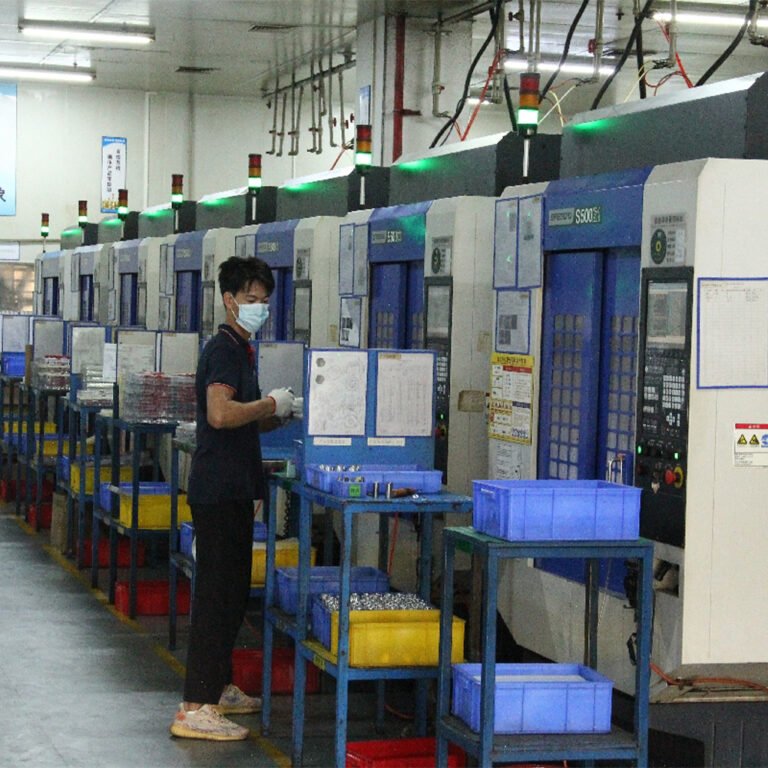
Various CNC machines, including milling, turning, and drilling machines, are employed to produce high-quality aluminum parts. Various machining processes, such as CNC machining, drilling, turning, and milling, are employed to produce high-quality aluminum parts, underscoring the broad applicability and efficiency of these techniques in the industry.