Level 5 of the Five Levels of Mechanical Engineering
A person capable of independently designing and implementing a feature.
This is the basic requirement for an engineer. If someone only has a basic understanding of engineering implementation methods and needs others to tell them what to do, they can at best be considered an assistant engineer or a technician. Even if they can independently code a feature, they rely entirely on the requirements manager for business-related details. “Technician” may sound like a nice title, but in reality, it refers to the lowest-level developer. In the future, we must strengthen our understanding of what it means to be an engineer and strive to advance to the next level.

CNC-machined bicycle parts from China
CNC machined bicycle parts offer superior strength, precise tolerances, and significant weight savings compared to cast or forged alternatives.
Common CNC Machined Bicycle Parts
Stems: Engineered from solid blocks of aluminum (like 6061-T6 or 7075-T6) to provide rigid steering performance and secure handlebar clamping.
Hubs and Shells: Precision-machined to ensure exact bearing alignment and accurate spoke hole placement for truer, stiffer wheels.
Pedals: Carved out to feature concave platforms, integrated grip pin holes, and hollow internal cavities for weight reduction without sacrificing durability.
Derailleur Hangers and Mounts: Machined to tight tolerances (often within ±0.005 inch) to guarantee exact alignment and eliminate ghost shifting.
Seatpost Clamps and Small Parts: Includes chainring bolts, thru-axles, and headset spacers that combine aesthetics with structural reliability.
Benefits of CNC Machining in Cycling
Tight Tolerances: Achieves exact mechanical fits that improve safety and component longevity.
Material Optimization: Removes excess material from non-stress areas, yielding an optimal strength-to-weight ratio.
Customization and Prototyping: Allows manufacturers to iterate designs rapidly and produce custom geometry without expensive casting molds.

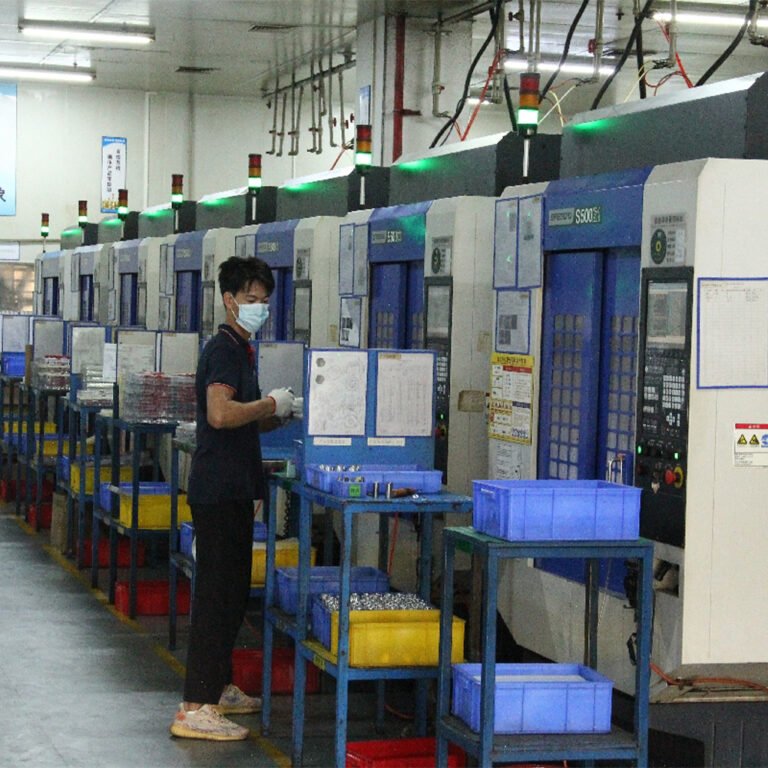
CNC Machining: A Core Process for High-End Components
- High-end bicycle hubs are a prime example of CNC machining applications. Through precision CNC machining, anodizing, and clean-room assembly, products such as mountain bike cassette hubs (compatible with disc brakes) and ultra-light road bike hubs are manufactured for mid-to-high-end markets in Europe and the Americas.
- CNC-machined crank arms and chainrings offer exceptional durability and power transfer efficiency. Unlike cast or forged parts, CNC machining ensures precise tooth profiles, resulting in smoother shifting and minimal energy loss. 7075-T6 aluminum alloy chainrings are a popular choice due to their superior strength-to-weight ratio.
- Braking precision is critical to the riding experience. CNC machining enables the production of high-quality brake levers and calipers that offer improved modulation, responsiveness, and a premium feel. Brake components made from 6061 and 7075 aluminum alloys are widely used for their strength and lightweight properties. Other CNC-machined parts—such as stems, pedals, and seatpost clamps—reduce weight while maintaining structural integrity.
For machining enterprises, the high-end bicycle component market offers opportunities for high-value-added orders. The market’s demand for small-batch customization, rapid delivery, and rigorous quality control aligns perfectly with the flexible production capabilities inherent in CNC machining.