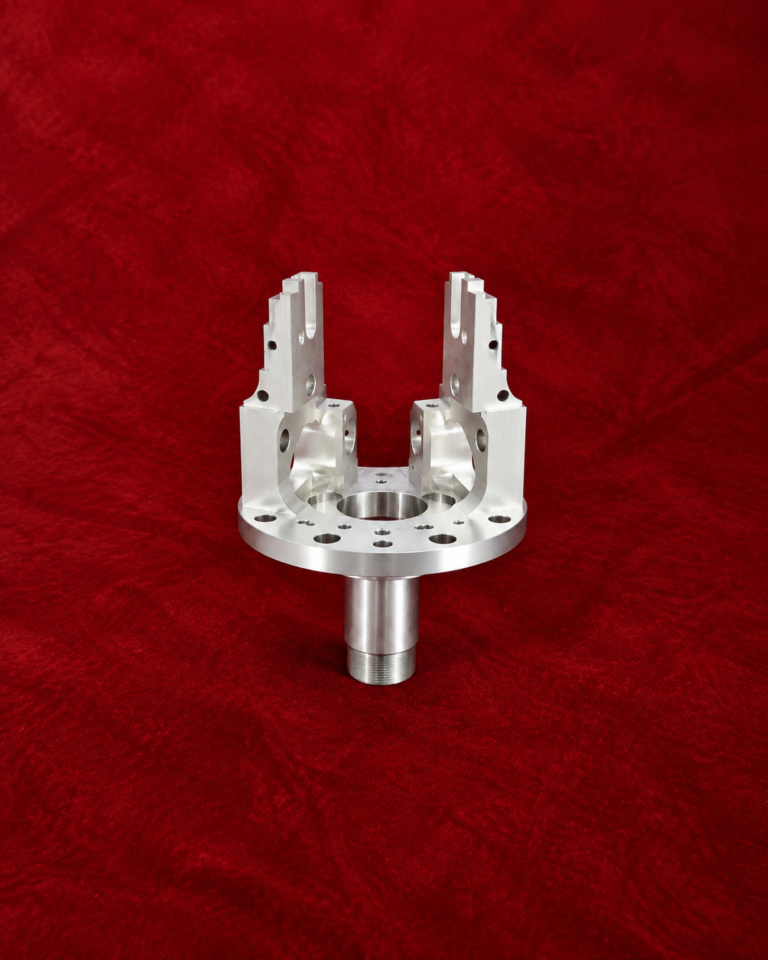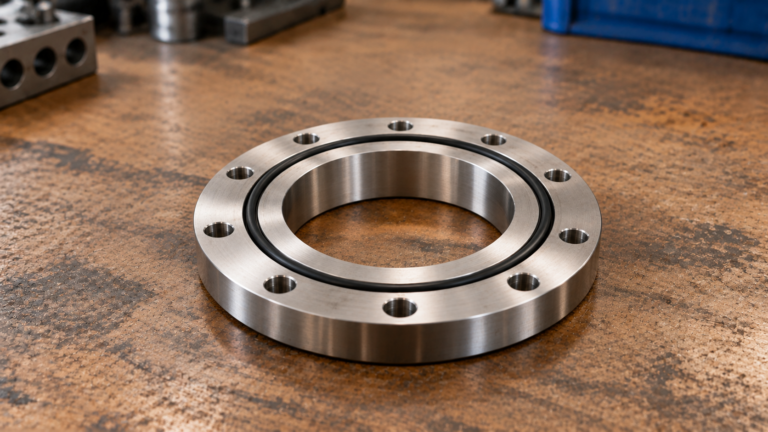
Supplier of 5-Axis CNC Machined Structural Components
Which parts are suitable for 5-axis CNC machining? Dongguan PRS explains using real-world examples.
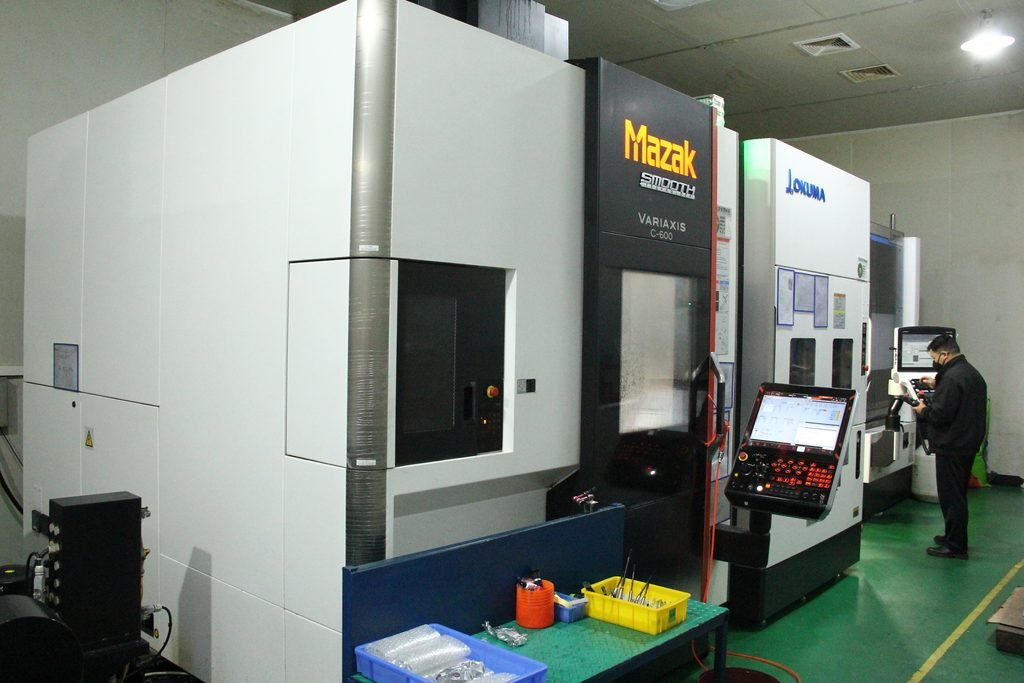
Multi-axis machining centers come with a high price tag; when should you upgrade to 5-axis machining? Dongguan Precision Hardware Products Co., Ltd. has specialized in high-precision CNC machining for 18 years. Equipped with Japanese Mazak 5-axis machining centers, the company excels at machining challenging metal parts—such as thin-walled components and complex structural parts—and has accumulated extensive experience in fields like robotic joints, semiconductor chambers, and medical implants. Below, we break down the characteristics of the five types of parts best suited for 5-axis CNC machining.
I. Parts with Spatial Angular Features—Minimizing Setups Ensures Precision
Traditional 3-axis machining of inclined planes or angular features requires auxiliary fixtures like sine tables or angle heads; every additional setup increases the risk of cumulative error.
5-Axis Advantage: By utilizing B- and C-axis rotation, the cutting tool can be positioned perpendicular to the machining surface, regardless of the spatial angle. Taking an “angled port” component for semiconductor equipment as an example, 5-axis machining allows all angular features to be completed in a single setup, consistently controlling positional tolerances to within 0.005mm.
II. Parts with Complex Curved Surfaces—Solving the “Tool Reach” Problem
Components such as turbine blades, impellers, and artificial joints feature complex free-form surfaces where 3-axis machining often leads to tool interference.
5-Axis Technology: By using shorter tools combined with workpiece orientation adjustments, interference between the tool holder and the part is avoided. This maintains optimal cutting conditions throughout the process, achieving surface finishes as fine as Ra 0.2μm. For medical implants—which feature complex surfaces and are often made from difficult-to-machine materials like titanium alloys—the advantages of 5-axis simultaneous machining are significant.

III. Deep-Cavity, Thin-Walled Parts—Solving the Persistent Issue of Tool Deflection
Typical examples include drone airframe structures and robotic arms. Characteristics include cavity depths exceeding six times the tool diameter and wall thicknesses of less than 1mm.
Key Technology: 5-axis machining allows the tool axis to maintain an optimal angle relative to the sidewall, drastically reducing radial cutting forces. When combined with high-speed machining strategies using shallow depths of cut, this enables the production of structural components with wall thicknesses under 0.5mm without deformation.
IV. Multi-feature Parts Machined on Six Sides – Minimizing Cumulative Error
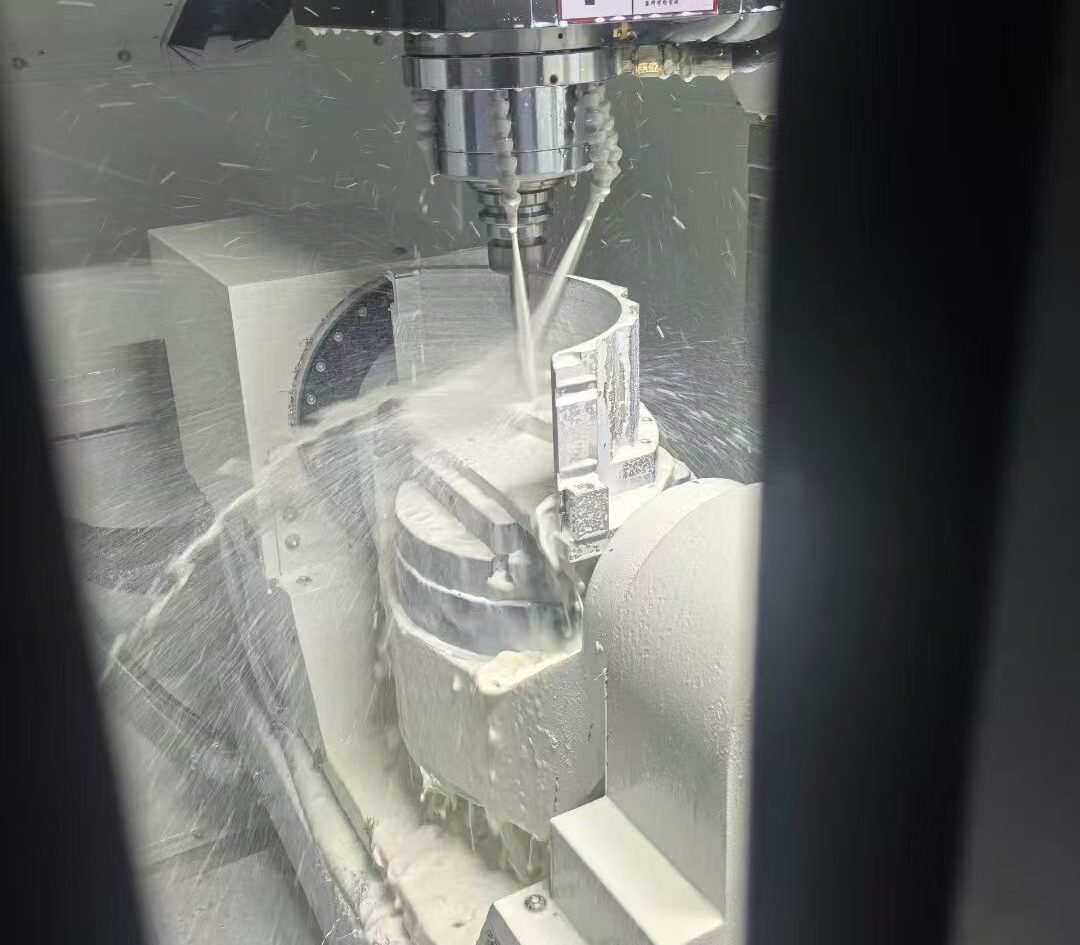
Components such as slide rails, carriages, and precision valve bodies require drilling, slot milling, and boring operations across six faces. Standard 3-axis machining necessitates 5 to 6 separate setups, leading to cumulative errors that can exceed 0.03 mm.
5-Axis Solution: Utilizing a “3+2” positional machining mode, all faces can be processed in just two setups, keeping geometric and positional tolerances within 0.008 mm. For parts with strict aesthetic and sealing requirements—such as medical device housings and optoelectronic module casings—5-axis machining minimizes visible transition marks.
V. Irregularly Shaped Parts and Slender Shafts – Solving the “Repositioning” Challenge
For parts requiring machining at irregular angles or featuring off-center geometries, 5-axis machining eliminates the need for complex custom fixtures. By employing turn-mill or simultaneous 5-axis strategies, machining of irregular features is consolidated into a single coordinate system, drastically reducing non-productive time.

Cost Consideration: 5-axis CNC machining is not suitable for every part. For standard rectangular blocks or high-volume, simple rotational parts, 3-axis or 4-axis machining offers better cost-efficiency. Dongguan PRS provides free process evaluations.