CNC Turning Services for Greenville South Carolina
Introduction to CNC Turning Processes
What is Turning?
Turning is a type of machining process. Machining also encompasses milling and drilling; turning involves feeding a cutting tool into rotating raw material to remove unwanted sections and shape the part as desired.
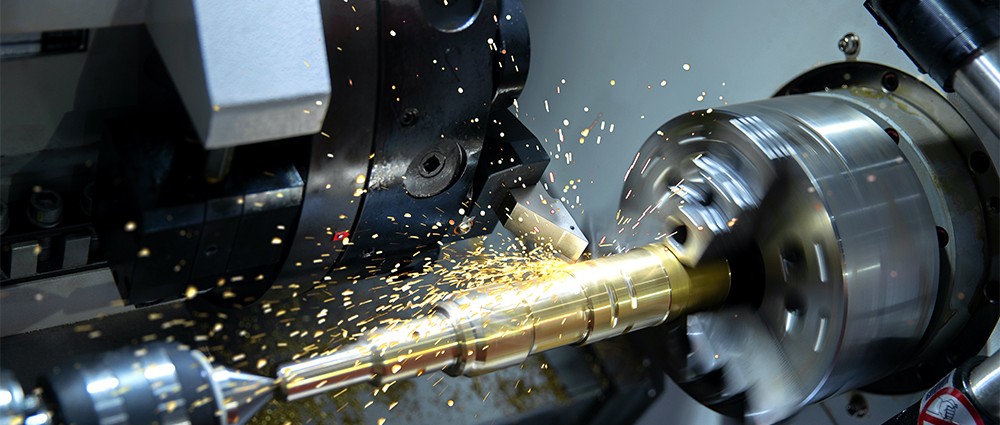
Turning is very similar to milling—another machining process—but the key difference lies in what rotates. In turning, the workpiece itself rotates, whereas in milling, the workpiece remains stationary while the cutting tool rotates to perform the machining.
Basic Turning Operations
Turning comprises eight fundamental operations: facing, outer diameter (OD) turning, chamfering, inner diameter (ID) turning, threading, drilling, parting-off, and knurling. These operations are described below.
01 Facing
During machining, the workpiece is initially longer than the final required length. Facing is an operation used to machine the end of the workpiece perpendicular to its axis of rotation. The cutting tool moves along the radius of the workpiece, removing a thin layer of material to achieve the desired part length and a smooth surface finish.
02 Outer Diameter (OD) Turning
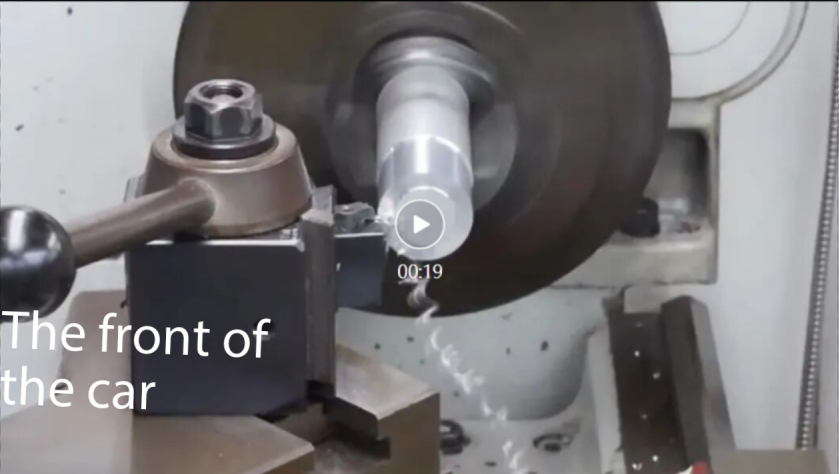
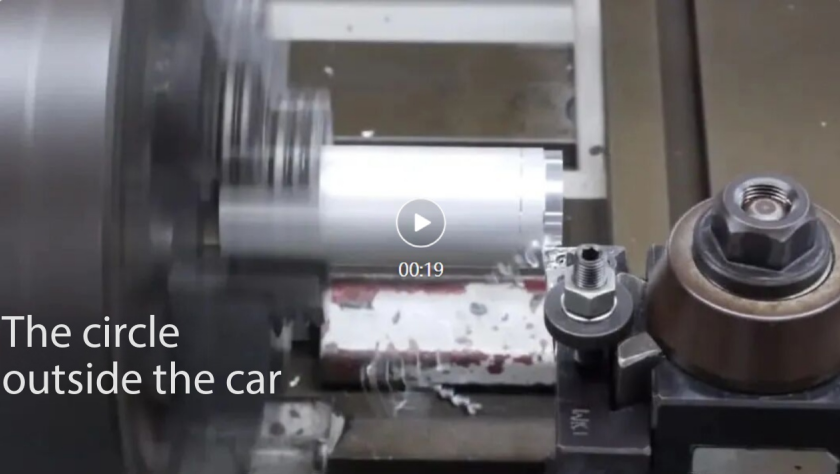
OD turning is a method where the cutting tool is applied to the exterior of the rotating material. It is the most common turning operation, used for surface finishing or for roughing out the approximate shape during the initial stages of machining.
OD turning is a method where the cutting tool is applied to the exterior of the rotating material. It is the most common turning operation, used for surface finishing or for roughing out the approximate shape during the initial stages of machining.
03 Chamfering
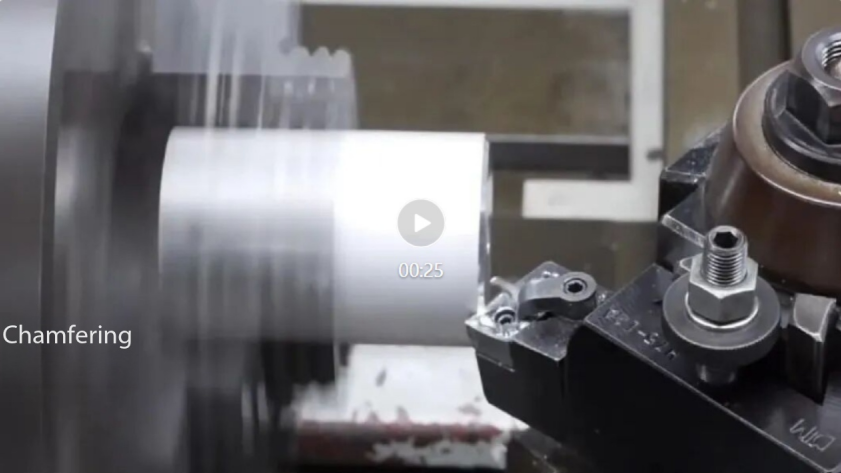
On a lathe, specialized chamfering tools can be used to perform this operation, with tool angles and dimensions selected according to specific requirements.
Turning chamfers involves creating a beveled surface—typically at a 45-degree angle—along the edges of the workpiece or the inner/outer edges of a hole. This process removes burrs and sharp corners, thereby improving safety, ease of assembly, and aesthetic appeal.
04 Internal Machining
Internal machining involves cutting the inner surface of a material to enlarge a hole previously created by a process such as drilling. It is used to adjust hole dimensions and finish internal surfaces.
When performing internal machining, the tool length must be increased to match the depth of the hole. However, care must be taken, as excessively long tools are prone to bending, which can compromise precision. Additionally, since chips tend to accumulate inside the hole, frequent chip removal is required.

05 Drilling
Drilling is a process in which a drill bit is pressed against a rotating workpiece to create a hole. Drilling is often the initial step required to create an opening that allows specialized tools to enter for subsequent internal machining operations
Because drilling with a standard bit does not yield high precision, a hole is typically drilled to the approximate required size first, followed by internal machining to achieve the final finish.

06 Threading
Threading is a machining process used to create screw threads. By using a specialized threading tool, both internal and external threads can be produced. While milling machines and machining centers are often limited to producing internal threads, a key advantage of turning is the ability to cut external threads.
The specialized threading tool is applied to the workpiece and moved at a constant speed. To ensure consistent thread pitch, an “automatic feed function” is typically used to maintain a steady movement rate.

07 Parting-off (Cut-off)
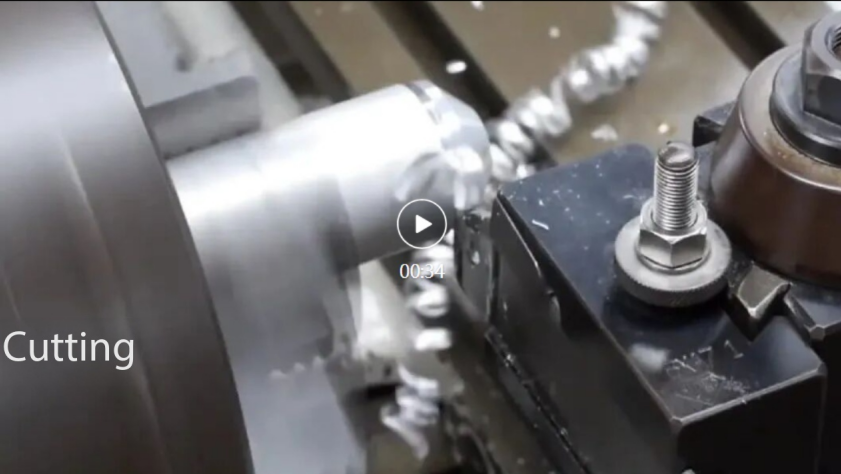
Parting-off is a machining process in which a tool is pressed against the material to sever a specific section—such as cutting a ring off a cylindrical workpiece—thereby removing unwanted material.
08 Knurling
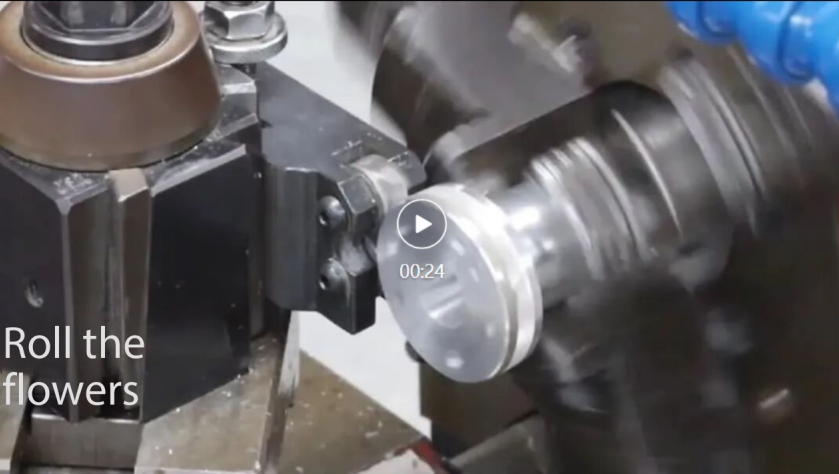
Knurling is a process performed on a lathe using a knurling tool to impress a specific pattern onto the surface of a workpiece. This process is primarily used to enhance surface grip (friction) or improve aesthetics. Common patterns include straight lines and diamond (cross-hatch) patterns, with various degrees of coarseness available depending on requirements.