Internal Thread and End-Face Machining of Water Pump Impeller Nuts
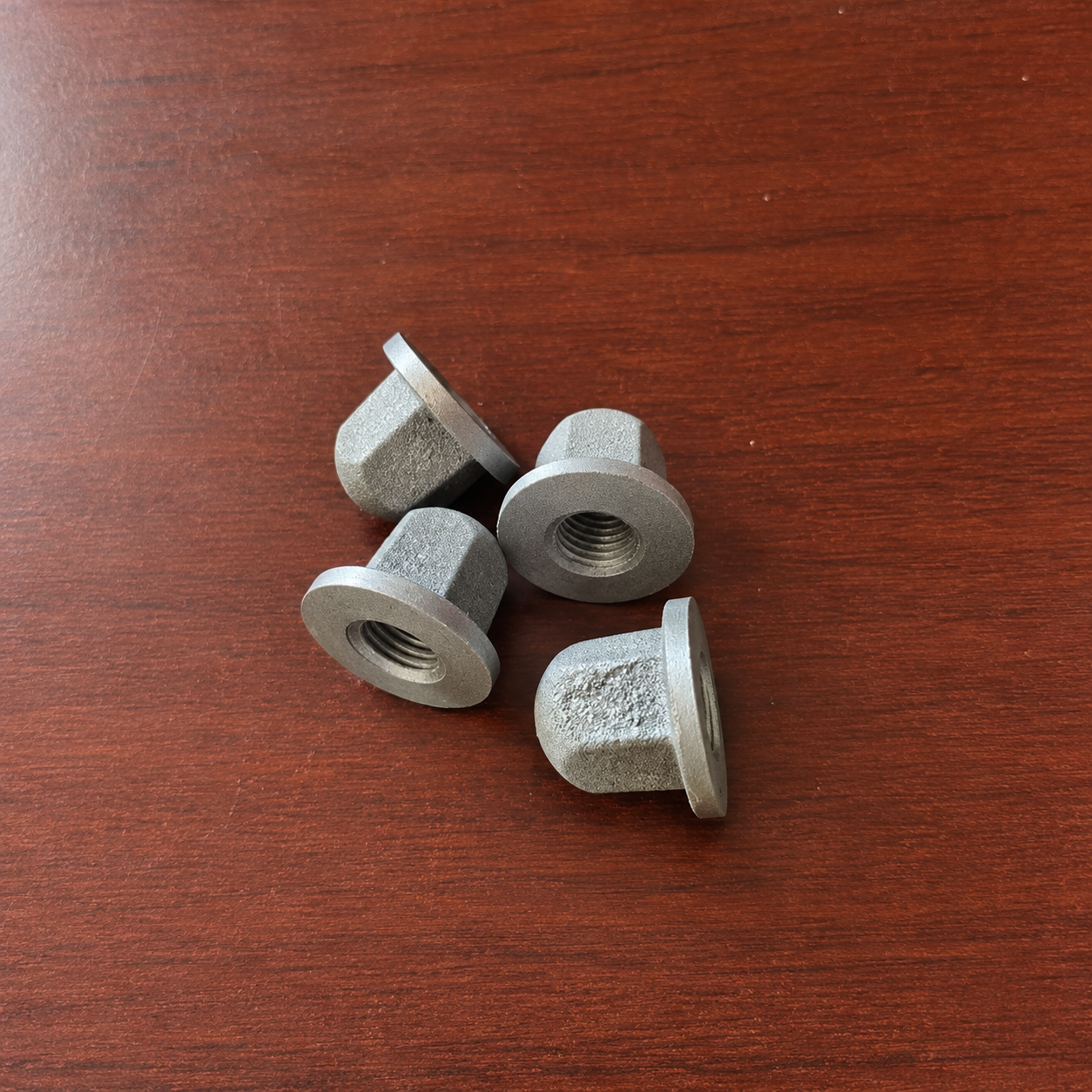
Impeller nut CNC machining produces the fastener that secures a water pump impeller to its shaft. The component usually contains an internal thread, flat seating face and external drive feature within a short overall length.
The internal thread must remain square to the seating face. If these features are machined from unrelated references, the nut may contact the impeller unevenly when tightened.
Establish the Seating Face
Bar stock is held in the lathe chuck, and the front end is faced to create the surface that will contact the impeller.
The tool moves continuously across the complete face to avoid leaving a raised center. A small edge break is added at the outside diameter without reducing the intended contact area.
This finished face becomes the axial reference for the internal bore, thread and overall nut length.
Prepare the Thread Bore
A center drill starts the hole before drilling removes most of the internal material. The drilled diameter remains smaller than the required thread minor diameter.
A boring tool then corrects the hole relative to the spindle axis and brings it to the programmed size. For blind nuts, the bore depth includes room for the thread tool to approach the end without contacting the bottom.
An internal relief groove may be machined beyond the usable thread. This gives the threading tool space to exit and allows the mating shaft to reach the required depth.
Cut the Internal Thread
The thread can be produced by tapping or single-point turning. Tapping is suitable for common sizes, while single-point threading provides greater control over larger diameters, unusual pitches and short thread lengths.
The threading tool enters the prepared bore and follows repeated passes until the full profile is formed. Chips must be removed from the cavity between passes, especially when the thread is blind.
Some pump designs use a thread direction selected to resist loosening during impeller rotation. The CNC program and tool orientation must therefore match the specified right-hand or left-hand thread.
Form the External Drive Feature
The outside of the nut may be hexagonal, slotted, round with flats or shaped for a special installation tool.
Turn-mill equipment can index the spindle and mill external flats without transferring the part. A screwdriver slot can be cut across the exposed face, while pin holes may be drilled at programmed angular positions.
The drive feature is machined after the main outer diameter is established so its position remains centered around the threaded bore.
Finish the Rear Face
The nut is parted from the bar with a small finishing allowance. It is then reversed and held by soft jaws, a collet or a fixture shaped around the external drive feature.
The rear face is machined to bring the component to final length. Any remaining chamfer or thread-entry relief is added during this setup.
Burrs are removed from the thread entrance and drive feature without rounding the seating face. Effective impeller nut CNC machining keeps the bore, internal thread and contact face aligned throughout both turning setups.